WE'VE MOVED!


As part of our big, new redesign of the Alliance for Justice website, the Justice Watch blog has moved. To be sure you're getting all the latest news about the fight for a fairer America, visit us at www.afj.org/blog
Showing posts with label clean water act. Show all posts

Thursday, October 25, 2012

Alliance for Justice joins celebration of Clean Water Act

But will the Supreme Court weaken the law?
By Matthew Greig, AFJ Klagsbrun Fellow

On Thursday Oct 18th Alliance for Justice staff joined a group of enthusiastic people at the Rayburn House Office Building celebrating the 40th anniversary of the passage of the Clean Water Act.  The celebration was organized by the Clean Water Network.   

One speaker, Rep. James Moran (D Va.), explained how President John F. Kennedy became a strong early supporter of clean water.  His commitment was strengthened by personal experience: When he was a senator he fell into the filthy Potomac River while fishing.  Today, the Potomac is a case study of the law’s success, to be featured in a forthcoming documentary.
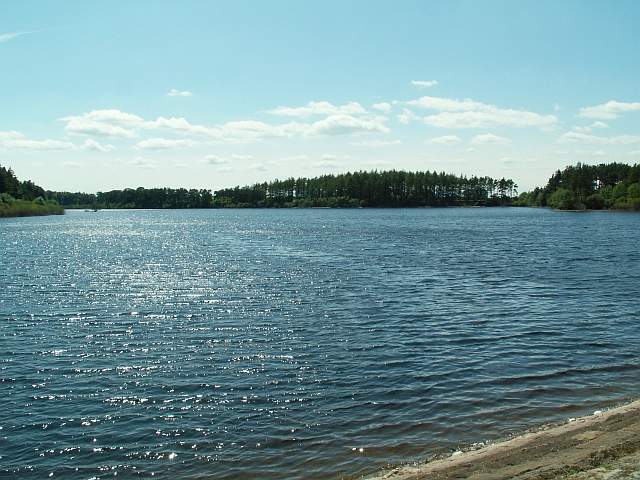
Castle Carrock ReservoirUnder the Clean Water Act, the Environmental Protection Administration (EPA) has implemented pollution control programs such as setting wastewater standards for industry. EPA also sets water quality standards for all contaminants in surface waters.

 While all of the speakers agreed that the Clean Water Act has accomplished a lot in cleaning up our waterways, they also emphasized that there is still more work to be done.   However, supporters need to remember that while great legislation starts with the Congress and the President, maintaining great legislation depends on our courts.  There have been numerous notable pieces of legislation passed over the last 40 years, all of which can easily be rendered meaningless by the current big-business friendly Supreme Court.
 
Currently the Supreme Court is scheduled to hear two consolidated cases concerning the Clean Water Act, Georgia-Pacific West v. Northwest Environmental Defense Center and Decker v. Northwest Environmental Defense Center.  In these cases, the Court will decide whether the federal government has the power to use the Clean Water Act to effectively regulate water pollution caused by the logging industry. 

Since the Clean Water Act requires any industrial operation that discharges waste water to acquire a permit, the Court’s opinion in the cases could also potentially weaken storm water discharge rules governing mining and construction work.   Because of these cases and potential  future cases, the Clean Water Act may be less effective when the time comes to commemorate the 50th anniversary.

Other Speakers at the 40th anniversary celebration included Sandra Diaz of Appalachian Voices; Ken Kirk of the National Association of Clean Water Agencies; Michele Merkel of Food & Water Justice, Food & Water Watch; Anna Aurillo of Environment America; Bill Lee of American Rivers; as well as a host of others.


Friday, October 15, 2010

Clean Water for Blog Action Day

When you think about water you probably think about many different things: rivers, swimming, rain, drinking water, droughts, floods, etc. Water is vital for life and a precious resource. Yet, how often do you think about the Supreme Court when you think about water? If your answer is never, we think you should start.

Thanks to two recent decisions by the Supreme Court undermining the Clean Water Act, thousands of the nation’s largest water polluters are now outside the Environmental Protection Agency’s reach, a calamitous situation affecting drinking water for about 117 million Americans.

In Solid Waste Agency of Northern Cook County v. U.S. Army Corps of Engineers (2001) and Rapanos v. United States (2006), the Supreme Court restricted the federal government’s jurisdiction over the nation’s waterways, suggesting that waterways entirely within one state, creeks that sometimes go dry, and lakes unconnected to larger water systems may not be “navigable waters” covered by the Clean Water Act.

As a result of these decisions, more than 1,500 major pollution investigations have been discontinued or put on hold in the last four years, and EPA regulators now say that they are unable to prosecute as many as half of the nation’s largest known polluters because officials either lack jurisdiction or fear that proving jurisdiction would be extremely difficult or time consuming.

And, while the number of facilities violating the Clean Water Act has steadily increased each of the last few years, EPA actions against major polluters have fallen by almost half since the Supreme Court rulings.

The effect of the Supreme Court’s decisions not only endangers our drinking water, but threatens the existence of wetlands, wildlife, and entire ecosystems. It also gives a free pass to corporations – part of a political agenda being furthered by the Supreme Court that consistently favors big corporations over average citizens. The conservative wing of John Roberts’s Corporate Court sides with big business 84% of the time.
If you want to ensure clean water in this country, you can take action and tell Congress to repair the damage caused by the Corporate Court, specifically by passing the Clean Water Restoration Act. But we must do more than correct the missteps of the Roberts Court if we want to ensure that environmental regulations are enforced. We must urge the President to appoint, and Congress to confirm, judges that will stand up for equal justice for all, not just the wealthy or powerful.